


How IT Hiring Managers Are Building AI-Capable Teams Without Overhiring
February 4, 2026

How IT Hiring Managers Are Building AI-Capable Teams Without Overhiring
AI is no longer a side experiment happening in a sandbox. For many organizations, it is quickly becoming a core capability that touches delivery, operations, security, customer experience, and decision-making.
The challenge is clear. Teams want real AI impact, but many leaders are still uncertain about which roles they actually need, which skills can be developed internally, and when specialized expertise is required. The result often falls into one of two extremes: overhiring for emerging job titles or underinvesting and remaining stuck in pilot mode.
The organizations seeing the most progress are taking a more intentional approach. They build AI-capable teams by focusing on outcomes first, enabling existing roles with practical, role-specific AI skills, and leveraging project-based expertise to accelerate the work that matters most.
Below is a framework you can use to take the same approach.
AI experimentation vs. AI operationalization
Most organizations begin their AI journey in experimentation mode. This often looks like a handful of proofs of concept, a small innovation or data science group, and AI tools introduced informally across teams. While these early efforts can generate momentum and isolated wins, they rarely scale in a consistent or sustainable way.
AI operationalization is where the real shift happens. This is the point where AI moves from isolated pilots into everyday IT delivery and business operations. For IT hiring managers, operationalization means AI capabilities are repeatable, measurable, secure, and embedded across teams rather than dependent on a few individuals or tools.
Making this transition typically requires more than new technology. It demands clearly defined use cases tied to business outcomes, strong data readiness and governance, built-in security and compliance controls, and a thoughtful approach to change management so teams actually adopt and trust AI-enabled workflows.
This move from experimentation to operationalized value is one of the most common hurdles IT leaders face today. According to recent research from
McKinsey, organizations are increasing AI adoption, but many still struggle to turn pilots into reliable, repeatable impact at scale.
The roles you need are not always “AI Engineers”
Many IT leaders assume becoming AI-capable requires hiring an entire new AI org chart. In reality, most organizations win by enabling the roles they already have.
Examples of “AI-enabled” roles that drive real impact without requiring a team of data scientists:
- Product managers who can translate business problems into AI-ready use cases, define success metrics, and prioritize responsibly
- Business analysts who can improve requirements clarity, validate outputs, and identify where automation creates measurable time savings
- Data engineers who focus on data quality, pipelines, access controls, and reliability (often the true bottleneck)
- Security and GRC teams who can evaluate risk, model governance, and ensure responsible use
- Developers and QA who can integrate AI tools into workflows and validate behavior under real-world conditions
- IT operations who can monitor AI-enabled systems and keep them stable, auditable, and cost-controlled
Microsoft’s 2024 Work Trend Index emphasizes that AI aptitude is becoming a broad-based expectation across roles, and that leaders are navigating a new hiring and skills reality as AI moves into daily work.
Where Project-Based Experts Help IT Teams Move Faster
Permanent hiring remains a critical part of building strong, long-term IT teams. At the same time, many IT hiring managers are pairing full-time talent with project-based experts to accelerate delivery, reduce risk, and keep initiatives moving while long-term plans take shape.Project-based support is especially effective when:
- Momentum is needed now
Specialists deliver near-term results while internal teams stay focused on core responsibilities. - The work is complex or high-stakes
AI readiness, data governance, cybersecurity, compliance, and model validation benefit from experts who have solved similar challenges before. - A bridge team makes sense
External teams establish the foundation and operating model, then transition ownership to permanent staff once the work is stable. - The roadmap is still taking shape
Teams gain flexibility to scale expertise up or down without committing to permanent roles too early.
This approach also strengthens internal upskilling. Working alongside experienced experts creates practical, real-world learning tied directly to business outcomes. Research from theWorld Economic Forum reinforces this shift , noting how quickly skills are changing and positioning upskilling and reskilling as central to modern workforce planning.
How to avoid hiring for hype instead of outcomes
AI can create pressure to “keep up,” which often leads to hiring based on buzzwords. A better approach is to hire (or augment) based on clear outcomes.Try this simple reframing:
Instead of : “We need an AI engineer.”
Ask : “What do we need AI to improve, and how will we measure success?”
Then align talent to the work:
- If the blocker is data quality, prioritize data engineering and governance
- If the blocker is adoption, prioritize product, change management, and enablement
- If the blocker is risk, prioritize security, compliance, and model oversight
- If the blocker is integration, prioritize application engineering and platform support
McKinsey’s research on AI upskilling also reinforces that adoption is not just a training problem. It is a change journey that requires leadership, enablement, and operating model clarity.
Checklist: Building an AI-capable team without overhiring
Use this as a quick internal alignment tool:
- Define 2–3 AI use cases tied to measurable outcomes (time saved, defects reduced, cycle time improved, cost avoided)
- Identify the real constraint (data, security, adoption, integration, or skills)
- Enable existing roles with AI fluency (PM, BA, engineering, security, ops)
- Add specialists where speed and risk matter (project-based experts for foundation and scale)
- Build an adoption plan early (training, guardrails, governance, and communications)
- Measure progress like a delivery program (milestones, KPIs, ownership, handoffs)
Bringing It All Together
Building AI-capable teams without overhiring requires more than filling roles. It takes clarity on outcomes, flexibility in how work gets done, and the right mix of skills at the right time.
That is where Talent Groups supports IT hiring managers beyond traditional staffing. Organizations partner with us to build contract, contract-to-hire, permanent, and project-based teams, giving leaders the flexibility to scale talent based on delivery needs, risk, and long-term strategy. Just as important, our support does not stop at resourcing.
Through specialized advisory and strategy services, we help IT leaders discover where AI can create real value, design the right operating and delivery models, deliver initiatives with the right mix of internal and external expertise, and evaluate outcomes to ensure progress is measurable, secure, and sustainable.
The result is a more intentional approach to AI hiring and enablement. One that avoids hype-driven decisions, accelerates meaningful outcomes, and builds teams prepared for what comes next.
If you are thinking through how to build or enable AI-capable teams in your organization, this framework can be a starting point for internal conversations. And if it would be helpful to talk through how talent, project-based support, and advisory services can work together, we are always open to a conversation. Contact us today to get started.

By Amy Carabase
•
September 21, 2026
Discover why today’s IT talent challenge is about skills, not headcount, and how organizations can close gaps across AI, cloud, data, and cybersecurity.

By Amy Carabase
•
August 11, 2026
Technology and workspace tools for left-handed professionals, including mice, keyboards, lap desks, and tips for a more comfortable setup.
By Amy Carabase
•
July 29, 2026
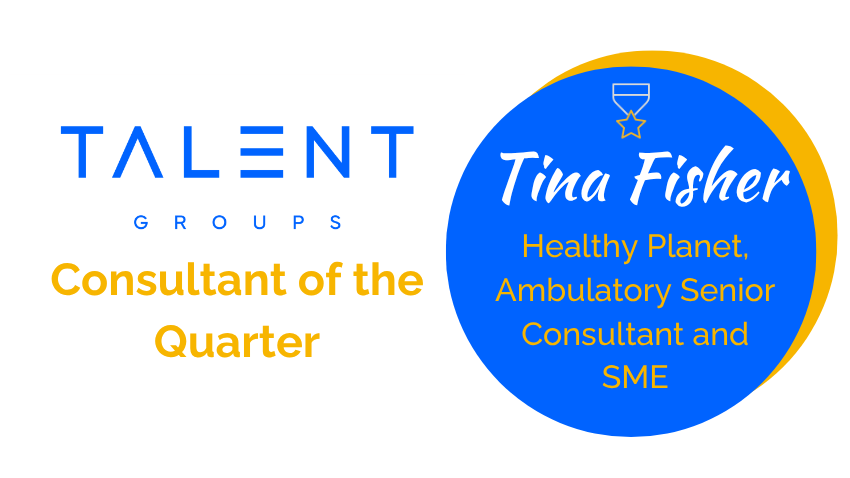
Meet Talent Groups' Q3 2026 Consultant of the Quarter, Tina Fisher, whose leadership, Epic expertise, and dedication helped a leading children's hospital achieve a successful go-live.